

Nearly every american traveler dreaming of open waters encounters the world of yacht charters at some point. With more than 60 percent of luxury vacationers choosing private charters over traditional cruises, this industry has become a defining part of modern leisure travel. Understanding how yacht charters work, the choices available, and the crucial financial details helps anyone turn that dream into a safe, rewarding adventure at sea.
Table of Contents
- Defining Yacht Charter And Its Fundamentals
- Major Yacht Charter Types And Differences
- How Yacht Charter Process Works Step By Step
- Legal And Safety Requirements Worldwide
- Costs, Financial Obligations, And Common Mistakes
Key Takeaways
| Point | Details |
|---|---|
| Yacht Charter Overview | Yacht charters provide a cost-effective way to enjoy luxury maritime experiences without the responsibilities of ownership. |
| Charter Types | Options range from bareboat to fully crewed charters, catering to various preferences and sailing skills. |
| Charter Process Steps | The yacht charter journey includes research, vessel selection, documentation, financial arrangements, and preparation for the sailing experience. |
| Financial Considerations | Chartering involves various costs beyond the base fee, requiring careful financial planning to accommodate unforeseen expenses. |
Defining Yacht Charter And Its Fundamentals
A yacht charter is a specialized rental arrangement where individuals or groups temporarily lease a private yacht for recreational purposes, offering an exclusive maritime experience without the substantial financial commitment of ownership. According to Grandee, yacht chartering involves complex interactions between vessel owners, charter brokers, and clients, creating a dynamic marketplace for maritime leisure.
The fundamental structure of yacht chartering involves several key components that distinguish it from traditional vessel ownership. Charter types range from bareboat (where renters operate the yacht themselves) to fully crewed charters that include professional staff managing all operational aspects. Clients can choose between time-based charters (weekly or monthly rentals) and destination-specific charters that focus on particular geographic regions or sailing routes.
Charter pricing is typically determined by multiple factors, including:
- Yacht size and luxury level
- Season and destination
- Crew requirements
- Additional service provisions
- Duration of the rental period
For serious maritime enthusiasts and luxury travelers, yacht charters represent more than just a vacation option – they offer a flexible, customizable approach to experiencing maritime travel. News from Explore Yachts highlights how modern charter services have transformed traditional boating experiences, making luxury maritime adventures accessible to a broader range of travelers.
Major Yacht Charter Types And Differences
Yacht charters offer diverse options tailored to different preferences and sailing experiences. Portals identifies two primary charter structures: bareboat charters and time charters, each presenting unique operational characteristics for maritime enthusiasts.
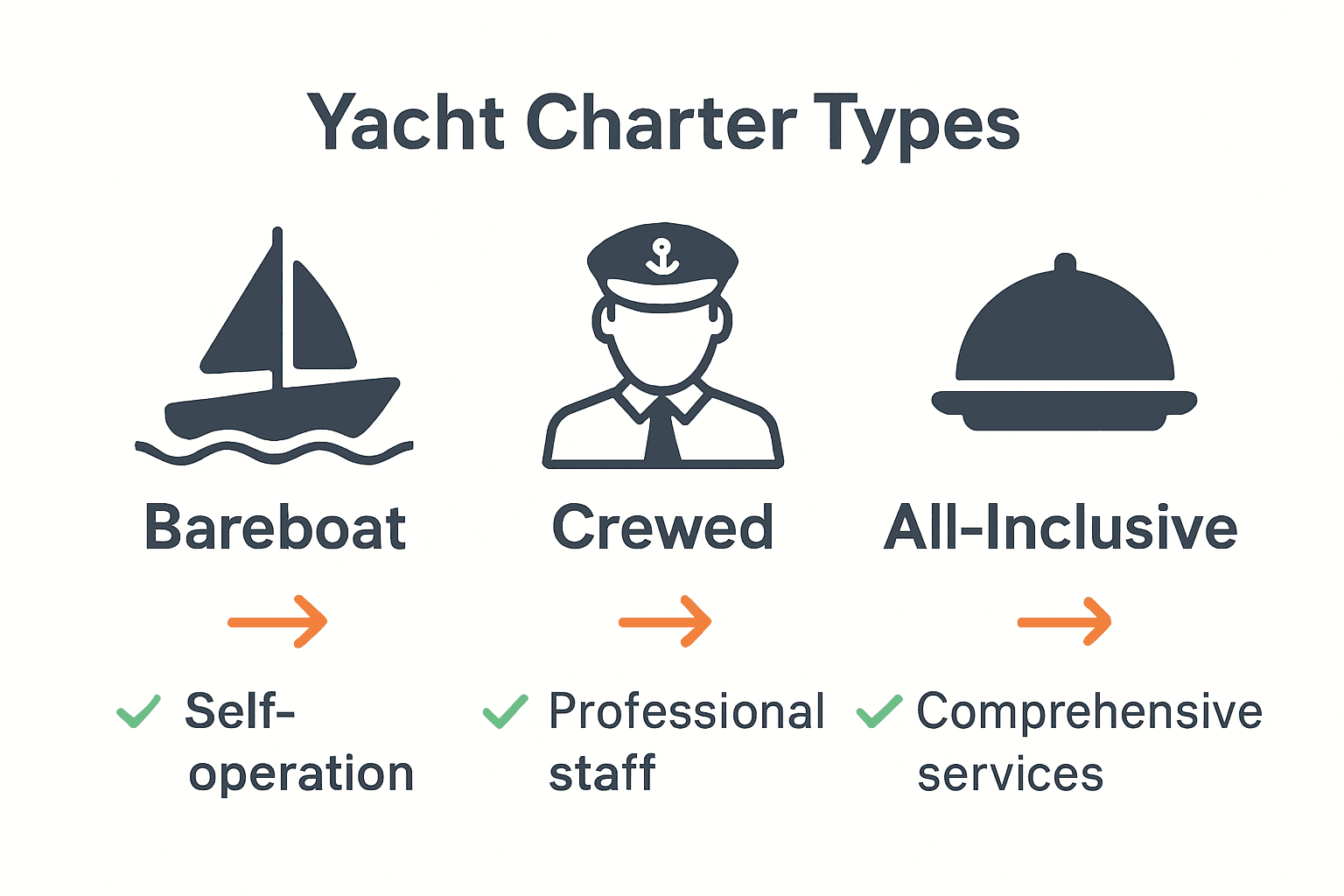
According to NauticEd, yacht charter types can be comprehensively categorized into several distinct models:
- Bareboat Charter: Clients rent an uncrewed vessel and manage all operational responsibilities themselves
- Crewed Charter: Includes professional staff like captains and service personnel
- Luxury Crewed Charter: High-end experience with gourmet chefs, multiple crew members, and premium amenities
- All-Inclusive Charter: Comprehensive package covering meals, beverages, fuel, and onboard services
- Skippered Charter: Includes a professional captain while allowing clients some operational involvement
Each charter type offers different levels of service, pricing, and independence.
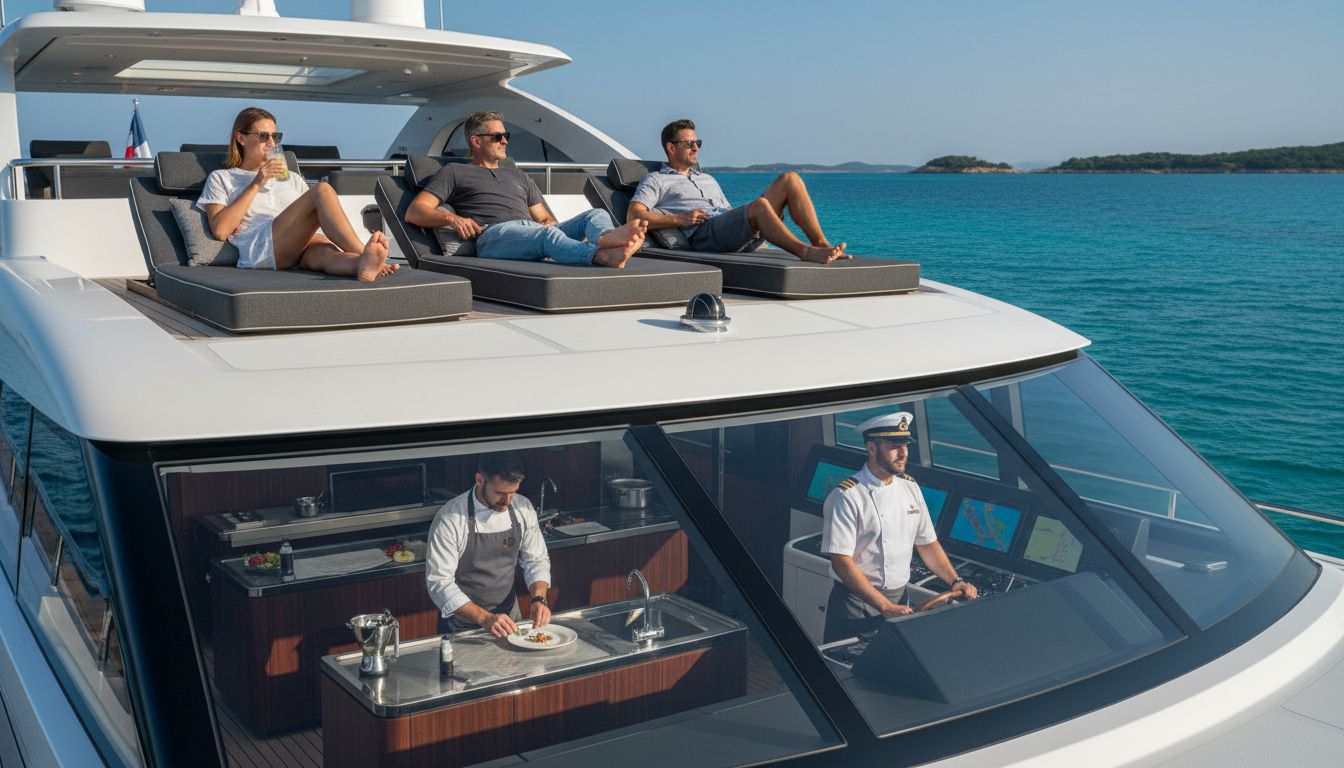 News from Explore Yachts reveals that modern charter services have evolved to provide increasingly personalized maritime experiences, allowing travelers to select arrangements that precisely match their sailing skills, comfort preferences, and budget constraints.
How Yacht Charter Process Works Step By Step
Chartering a yacht involves a systematic approach that transforms maritime dreams into reality. Grandee outlines a comprehensive process that guides potential charterers through each critical stage of planning and execution.
The yacht charter journey typically unfolds through several key stages:
- Initial Research and Consultation
- Determine charter type and budget
- Identify preferred destinations
- Assess personal sailing capabilities
- Vessel Selection
- Review available yacht options
- Verify vessel specifications
- Confirm technical requirements and amenities
- Documentation and Certification
- NauticEd emphasizes the critical importance of proper sailing certifications, especially for bareboat charters
- Submit required personal documentation
- Verify insurance requirements
- Complete charter agreement
- Financial Arrangements
- Pay initial deposit
- Understand cancellation policies
- Confirm additional fees and charges
- Pre-Charter Preparation
- Attend vessel briefing
- Conduct initial equipment and safety checks
- Plan detailed itinerary
For travelers seeking a seamless maritime experience, Explore Yachts recommends working closely with experienced charter brokers who can guide you through each intricate step of the process, ensuring a smooth and memorable sailing adventure.
Legal And Safety Requirements Worldwide
Yacht charters operate within complex international legal frameworks that prioritize maritime safety and passenger protection. SaferBoater highlights the critical importance of comprehensive certification and compliance requirements for international yacht chartering.
Legal requirements for yacht charters typically encompass several key regulatory dimensions:
-
Certification Requirements
- Bareboat Charter Master certification
- Verified sailing competency documentation
- International maritime licensing
- Proof of navigation skills and experience
-
Safety Documentation
- Vessel seaworthiness certificates
- Comprehensive maritime insurance
- Emergency safety equipment verification
- Medical and evacuation protocols
Grandee notes that charter associations play a crucial role in standardizing legal frameworks across different jurisdictions. International maritime regulations require charterers to demonstrate:
- Navigational proficiency
- Understanding of maritime law
- Compliance with local and international maritime regulations
- Comprehensive risk management strategies
Navigating these complex legal landscapes demands thorough preparation and expert guidance. Experienced charter brokers can help travelers understand and meet the intricate legal requirements that ensure a safe and compliant maritime experience.
Costs, Financial Obligations, And Common Mistakes
Yacht charters involve complex financial considerations that extend far beyond the initial rental price. NauticEd provides critical insights into the comprehensive financial landscape of yacht chartering, emphasizing the importance of thorough financial planning.
Primary Cost Components include:
- Base charter fee
- Fuel expenses
- Provisioning and provisioning deposits
- Crew gratuities
- Insurance and security deposits
- Additional equipment rentals
- Port and marina fees
Sea-Man highlights several common financial mistakes that charterers frequently encounter:
- Underestimating Additional Expenses
- Failing to budget for unexpected costs
- Overlooking mandatory insurance requirements
- Not accounting for potential damage deposits
- Hidden Financial Risks
- Unexpected maintenance charges
- Potential penalties for late returns
- Supplemental equipment fees
- Cancellation and rebooking expenses
Successful yacht chartering requires meticulous financial preparation. Experienced charterers recommend setting aside an additional 20-30% above the base charter fee to cover unexpected expenses and ensure a stress-free maritime adventure.
Unlock the Full Potential of Your Yacht Charter Experience
Navigating the world of yacht charters can feel overwhelming with so many types, legal details, and hidden costs to consider. If you want to transform your maritime dreams into unforgettable adventures without the stress of uncertainty then understanding your options is just the beginning. Whether you are looking to charter with confidence or eventually own your perfect yacht, mastering the complexities of chartering is essential.
Take control of your yacht journey today by partnering with experts who know exactly how to address every challenge mentioned in the article. Our team at Explore Yachts provides powerful tools to help you find the right vessel with ease. We help you avoid costly mistakes by offering education and guidance around charter types, costs, and legal requirements. Start your search now or reach out to learn how we can ensure your experience is seamless and rewarding. Visit Explore Yachts and step confidently into the world of yacht chartering and ownership.
Frequently Asked Questions
What is a yacht charter?
A yacht charter is a rental arrangement where individuals or groups temporarily lease a private yacht for recreational purposes, allowing them to enjoy a maritime experience without the costs associated with ownership.
What are the main types of yacht charters?
The primary types of yacht charters include bareboat charters, where clients operate the yacht themselves, and crewed charters, which come with professional crew members. Additionally, there are luxury crewed charters, all-inclusive charters, and skippered charters.
How do I prepare for a yacht charter?
Preparation for a yacht charter typically involves initial research to determine the charter type and budget, selecting a vessel, handling documentation and certification, making financial arrangements, and planning a detailed itinerary.
What costs should I consider when chartering a yacht?
Key costs in yacht chartering include the base charter fee, fuel, provisioning, crew gratuities, insurance, and additional equipment rentals. It’s advisable to budget an extra 20-30% of the base fee to account for unforeseen expenses.
Recommended
Find a listing you're excited about?
Here's what's next:
A typical U.S. vessel transaction handled by a licensed yacht salesperson requires:
- Terms, pricing agreed upon in an accepted offer.
- A 10% earnest money deposit sent to a secure escrow account
- Then the engines can be started, electronics are tested, or a mechanic, surveyor or haul-out facility performs inspections.
The contract will give the buyer 14 days to inspect the vessel and decide whether to proceed. During those 14 days, the buyer may reject the vessel for any reason and receive the deposit back, less any inspection expenses incurred on the buyer’s behalf.
Request a Call
Send A Message
"*" indicates required fields
Search All Listings
"*" indicates required fields
West Coast Winners
East Coast Exclusives
2027 Blackfin Boats in Florida: Explore Your Options with Terraglio Yacht Group
Terraglio Yacht Group is showcasing 2027 Blackfin boats for sale, giving Florida boaters a place to compare the brand’s center console, dual console, and hybrid bay models. For Explore Yachts readers, the range offers an interesting starting point: choose the layout around the days you want to spend aboard. An early fishing trip, a family cruise, and an afternoon at
Terraglio Yacht Group Becomes the Jupiter Dealer for Martin County
Martin County boaters have a new connection to Jupiter Marine. Terraglio Yacht Group has announced its partnership as the new Jupiter dealer for Martin County, expanding its new-boat offering with a brand known for offshore performance, comfort, and customization. At Explore Yachts, we know that finding a boat involves more than comparing specifications. The people who help you understand the
New SŌLACE 41CT at FLIBS 2026: Connect with Terraglio Yacht Group
The new SŌLACE 41CT catamaran is heading to the 2026 Fort Lauderdale International Boat Show, giving center console buyers a fresh model to explore this fall. With the show running October 28 through November 1, the launch brings SŌLACE’s approach to fishing, entertaining, and onboard comfort into a twin-hull design. For boaters considering the brand, Terraglio Yacht Group, an authorized
Mid West Only
Set Sail on Your Dream Adventure: The Great Loop Awaits in 2026!
Set Sail on Your Dream Adventure: The Great Loop Awaits! Embark on an unforgettable journey aboard the luxurious brand new Fountaine Pajot 44’ catamaran as you navigate the legendary Great Loop in 2025. This incredible boating trip is not just a dream; it’s an adventure waiting to unfold! Explore the stunning vistas of the Great Lakes. Starting your journey here,
Incredible Deals in the Midwest
Whether you’re looking for an affordable liveaboard on the Great Lakes, a bowrider perfect for tubing adventures, or a luxury catamaran to embark on your Great Loop journey, we have you covered. Direct access to manufacturers ensures quality and reliability. At Explore Yachts, our handpicked professional network guarantees that you receive top-tier service and exclusive deals tailored specifically to your
Private Vault: Off-Market Listings for Buyers and Sellers
As we cruise into 2026, Explore Yachts continues to be the beacon of trust for buyers and sellers in the yacht community. At Explore Yachts, we compile and keep a private list of buyers and potential sellers, expediting the ownership process. If you know your ideal vessel start your search now! If you own a vessel and open to off-market